What Is Googlebot? How Google Crawls and Discovers Websites
https://popularseotools.com/en/blog/what-is-website-indexing
What is Googlebot? I will expose the mystery of how Google scout and find websites
When you Post a site, all-natural concern is how does Google locate your pages and also choose whether or not their materials can be accessed. This starts with Googlebot, the web crawler for Google.
So, what is Googlebot? The generic term for those that find and crawl pages on the web to be retrieved and indexed by Google Search is called Google's Web Crawlers or Googlebot. At the moment, Google describes two broad types of crawlers called Googlebot Smartphone and Googlebot Desktop. Google uses the mobile crawler for most websites.
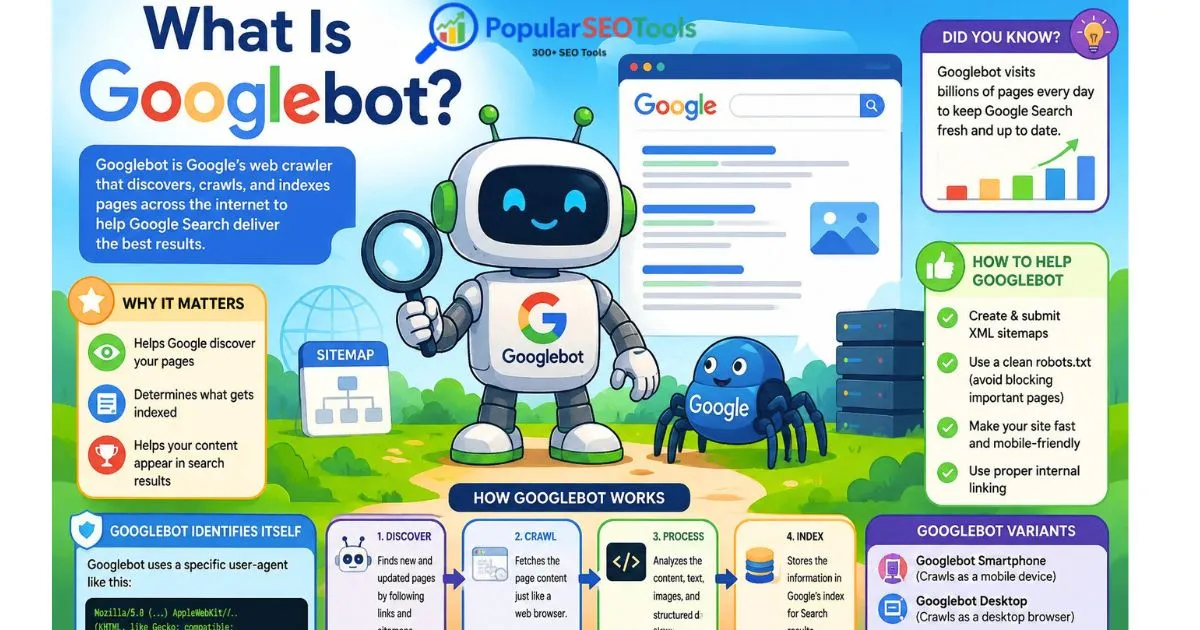
By knowing how Googlebot works, websites know where to troubleshoot crawling issues, create a structure for their internal links and the use of robots. If you know how to properly read a file from google. txt, understand crawling and indexing of pages and know what website that is indexed.
What Is Googlebot?
The crawler that Google uses for Google Search is called googlebot. On the other hand, a crawler is a special kind of software that hops from one URL to another, download their content and find links to more URLs.
Googlebot is not one computer trolling the web one page at a time. An extensive network of computers and automatic devices crawl the content on the Web for Google. This is an algorithm that basically selects which sites to crawl, when and how many pages to send out of the entire sites. It attempts to prevent crawling a site too rapidly and creating an unnecessary burden on the server.
For site owners, this means that Googlebot is a critical link in the chain between publishing a page and having it appear at all in Google Search.
What Does Googlebot Do?
The role of Googlebot is to find and access online content Google might pull in for Search.
A simplified version of the workflow Googlebot goes through looks something like this:
- Google discovers a URL.
- Googlebot decides if it can crawl the URL.
- Googlebot requests the page.
- Google picks up the response and finds more URLs.
- It can be the case that the page is actually rendered on-demand, which also means executing JavaScript.
- This can then be indexed by Google and analysed.
Thus, crawling and ranking are not the same. The main role of Googlebot is to find and crawl, it is all about that. Other Google systems process, index and rank information for Search.
How Does Googlebot Discover Websites?
Google must know that the URL exists before Googlebot can crawl a page! This is called URL discovery.
The way URLs are found is a combination of multiple factors, the most important being links as an example for Google. This means if Google is aware of Page A, then when a crawlable link to a new URL links from Page A this allows googlebot to discover the newly created URL.
So for example, you might have this page:
example. com/blog/googlebot-guide
As long as there is a regular link that points to that article somewhere else in your site, because Google will crawl the old page and likely find the new URL.
Sitemaps can also tell Google about URLs you want it to be aware of. Keep in mind, though, a sitemap is just a suggestion that Google crawls or indexes each URL contained in it.
Internal Links Matter
Internal links not only assist users in navigating through a website, but they can also help Google discover further pages.
Google recommends using crawlable links. A basic version with standard HTML anchor elements and href is the most predictable format for Google to parse and crawl.
Therefore, an internal linking structure that is helpful can help search engines to see how different parts of your website interrelate.
How does Googlebot work when it crawls a page?
When Google is aware of the URL, Googlebot might request a page. This point in chronology is called the crawling stage, where before Google crawls the pages, they check if their crawler has permission to access that URL based on its crawling restrictions.
Googlebot will then fetch the page and you prepare the return. Another thing that happens in this process it that google may find the links and those newly found URLs be added on its crawl queue.
Googlebot can also render. This is especially crucial for JavaScript-dependent sites where sometimes content or links are not present in the first HTML response.
According to Google, their rendering system uses a recent version of Chrome to render the page after processing JavaScript before it is parsed.
Googlebot Smartphone vs. Googlebot Desktop
There are two major kinds of Googlebot that Google differentiates:
|
Crawler |
Purpose |
|
Googlebot Smartphone |
Works. Crawls as a mobile device. |
|
Googlebot Desktop |
Crawls pages a desktop device. |
Google says the majority of sites are solely indexed based on their mobile content, which is why most Googlebot requests use the smartphone crawler.
This underlines the significance of website owners to make sure that important content and links are present on the mobile version of their pages.
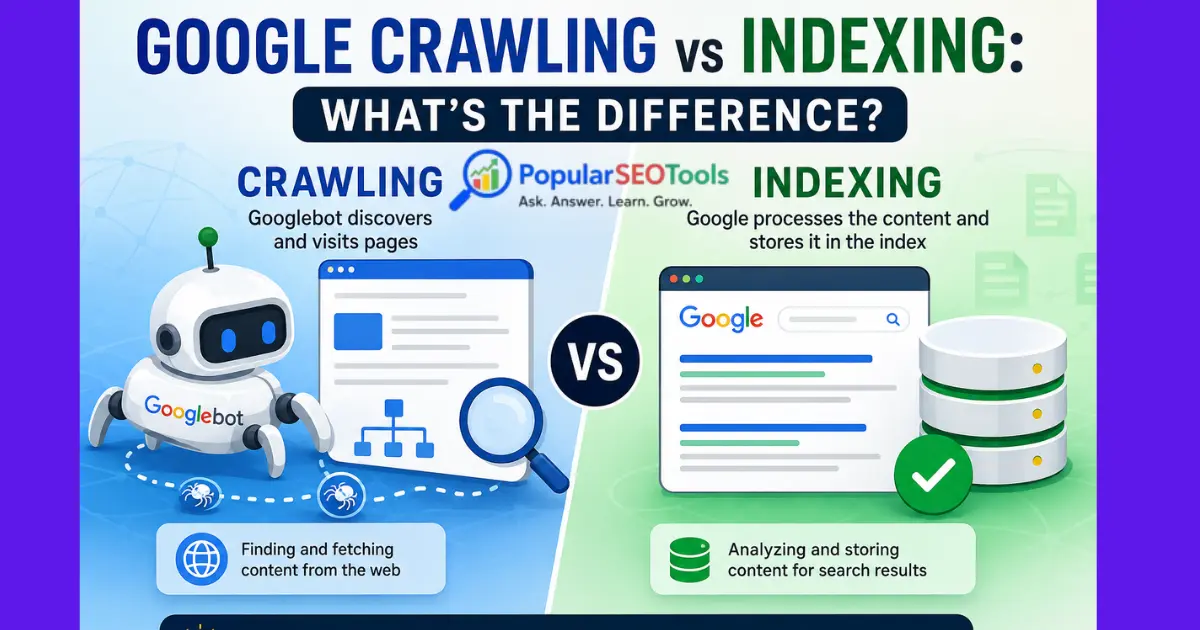
What is the difference between crawling and indexing?
And this is one of the most important learnings to keep in mind.
Crawling is when Googlebot visits and downloads a URL.
Then comes indexing, where Google interprets the data in the crawled content and decides whether/how it can be added to Google's index.
Thus, a page might be crawled without being indexed.
The reason that not every page in all stages of Search makes it through is because as Google explains, "Not All Pages Make It Through." Already crawled pages might not be indexed due to technical reasons, crawl restrictions or because they contain duplicate content (and also other reasons such as lacking an index attribute).
What is Robots.txt and how does it affect Googlebot?
The robots.txt Crawlers crawl your site; they read the crawlers txt file, which lists instructions to an automated crawler. It's widely used by website owners to inform Googlebot what areas of a website should not be crawled.
For example, a robots.txt Here is the fact: txt file may have rules that prohibit Googlebot from accessing a certain directory.
However, robots.txt As far as crawling control is concerned, txt is not a censorship siding.
Google says specifically that blocking Googlebot from crawling a URL does not automatically mean the URL itself will not be shown in Search. When Google can get to the page and process that directive, the noindex is likely a better mechanism to prevent from being indexed.
Why This Distinction Matters
One example: blocking a page in robots. txt, and you expect to have Google remove it from the search index.
These are different instructions:
- robots. txt: Allows a crawler to visit or not a URL.
- noindex: This can be used to instruct search engines not to index an accessible page or resource.
- Password protection: Blocks both normal visitors and crawlers from accessing protected content.
Implementing these incorrectly can make technical SEO issues even more difficult to troubleshoot.
How Do Sitemaps Help Googlebot?
An XML sitemap is a file of URLs that you want search engines to see. This can be especially helpful for sites with large numbers of pages, new content, or intricate structures.
Does not, in any way, replace the need for internal links Submit a sitemap does not guarantee crawling & indexation Sitemaps are one of these data types that would allow webmasters to provide information about URLs, such as how often they change and how important they are relative to other URLs, but Google states that sitemaps should be treated like helpful tips rather than strict instructions for crawling.
A good way to go for a common use case, is both:
- Link your pages up internally when they are about the same thing.
- Improved XML sitemap (including important URLs).
What Can Block Googlebot From Crawling a Page?
Common technical issues that might interfere with crawling.
1. Robots.txt Restrictions
A robots. Sometimes, there is a case that Googlebot will be blocked by the txt rule or something else which must be important on your side!
2. Server Problems
Googlebot cannot crawl pages because of server errors, network problems, or unreliable hosting.
3. Login Requirements
In the case a page you want to crawl is protected behind an authentication wall, this means private content which cannot be accessed by Googlebot.
4. Poor Link Structure
If a key page has very few, or even no crawlable links pointing to them, it can become increasingly challenging to discover those URLs.
5. JavaScript Problems
Even though Google processes JavaScript, a website cannot presume that every crawler or method of indexing will run JavaScript like a non-JS browser. Separate essential content and links in HTML that are easy for a machine to process.
6. Incorrect Technical Configuration
Improper redirections, status codes, indexation directives, or canonicalization can cause more crawling and indexing headaches.
How to make a site more crawl-friendly for Googlebot
You shouldnt build a complex system just to make it easier for Googlebot understand your website. Start with the fundamentals.
- Keep important pages publicly accessible. Allow Googlebot to reach the pages you want in Search.
- Use crawlable internal links. Use standard HTML links to link related pages.
- Maintain an XML sitemap. Put important URLs you want Google to be able to discover.
- Check robots. txt. Ensure critical sections are not unintentionally obscured.
- Fix server errors. Required Pages must give responses when hit.
- Review mobile content. Ensure the important data and links available to users exist in the mobile version.
- Use appropriate indexing directives. Do not accidentally put noindex instructions on pages you want to have indexed
- Monitor Google Search Console. Google Search Console is a powerful set of tools for crawling and indexing issues.
In the minimum technical requirements for Googlebot, it should not be blocked, the page should work successfully and there should be indexable content on the page. Compliance with these requirements allows a page to be indexable, but does not automatically translate into an action from Google indexing it.
How to test if the Googlebot can reach your page
Do not assume that your important page is ignored by Googlebot just because it is missing in front of the googles. Investigate the technical situation first.
A practical troubleshooting process is:
- Then go to a normal browser and check it works.
- See if the HTTP response of the page has server errors.
- Review your robots. Accidental Blocking Rules Using Given Set Of Keywords (Rules-AB) In Signature File Format.
- Is there a noindex directive
- Double check that the page is accessible via crawlable internal links.
- If relevant make sure the URL is part of your sitemap
- Check the URL with Google Search Console — Go to the URL Inspection tool and inspect the URL.
See our article on where Search Console can help in providing information about the Google index version of a URL & how website owners investigate indexing issues.
How To Spot a Real Googlebot?
Yes, but do not only rely on the user-agent string.
The server request may conceivably say it is from Googlebot now when the bot was actually built by a separate web crawling located faking to appear as though it were Googlebot. Google advises confirming suspicious requests through reverse DNS lookup or checking the origin IP against Google's published list of crawler IP ranges.
That is particularly useful when you are looking through server logs or investigating some suspicious activity by crawlers.
Googlebot and Website SEO
The technical SEO aspect of this is directly seeing googlebot as a user (who is required for internet pages to be indexed into organic Search).
But a crawlable website is not necessarily a well-ranking one.
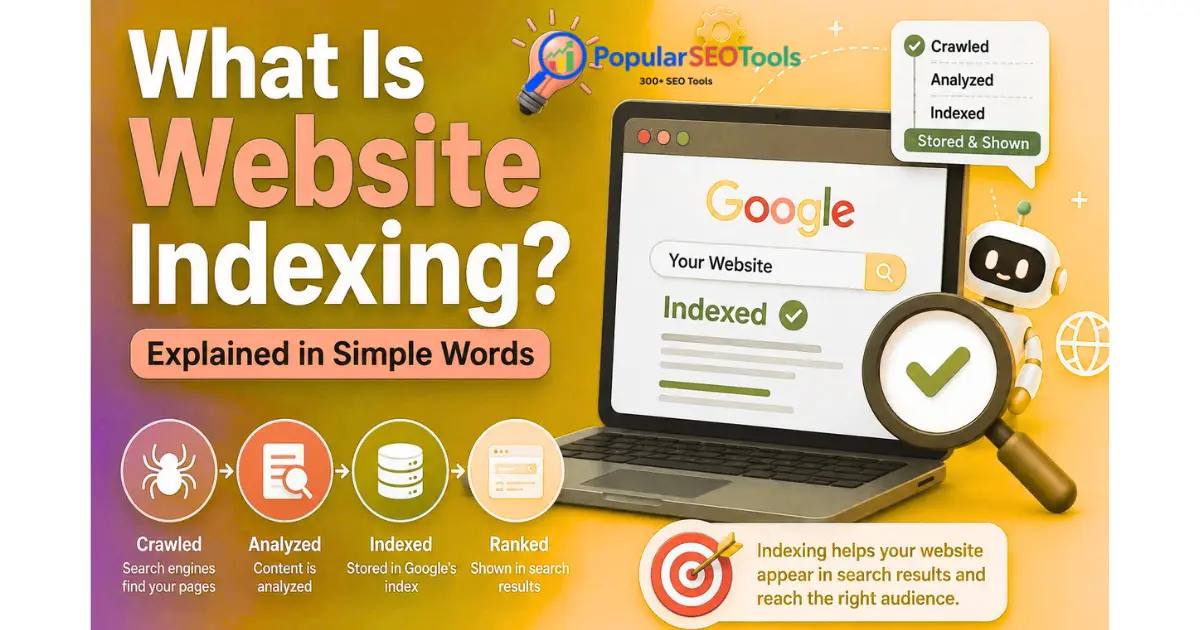
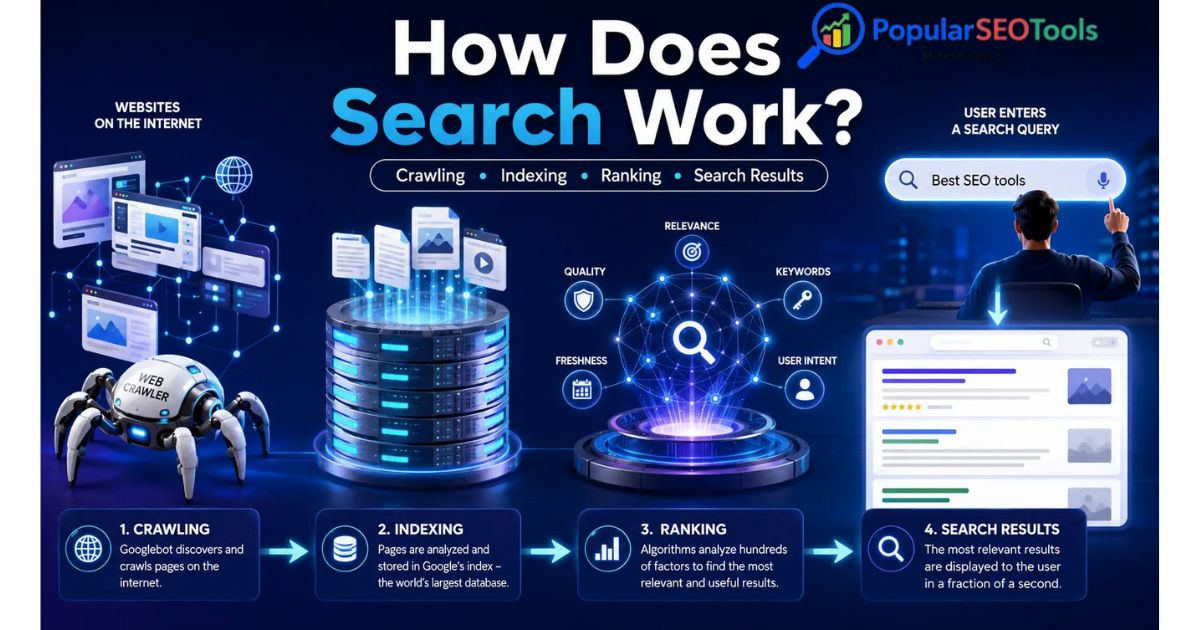
Building a successful search presence is made up of several distinct stages:
- Discovery: Google finds a URL
- Crawling: Googlebot accesses the URL.
- Crawling and Indexing: Google renders the page and, if necessary, its JavaScript.
- Indexing: Google examines the page content and possibly saves some data about it in its index.
- Ranking: Google algorithms decide if and where pages are going to be shown in results for individual queries.
This important differentiation helps avoid a common SEO misunderstanding: crawlability is not equal to rank.
Common Googlebot Mistakes to Avoid
- Blocking important pages in robots. txt: Before launching major changes on a site, review crawling rules
- Using robots. txt: Use it as an indexing removal toolYou separate the control of crawling and indexing.
- Sitemap only: Have a strong internal linking structure too!
- Disregarding mobile content: Google predominantly focuses on indexing mobile content for the vast majority of sites.
- Crawling! indexing: Google does not guarantee that all crawled pages will be indexed.
- Inaccessible links: Important pages should be linked with crawlable links.
- Treat every crawler that is Googlebot as a fake: Check suspicious requests not against user-agent but against the context.
Googlebot Crawling Checklist
Here is a brief checklist to use when reviewing a site:
- Important pages are publicly accessible.
- Googlebot is not accidentally blocked.
- Robots. txt contains intentional rules.
- Accidental noindex directives on important pages
- All significant URLs have internal links that allow them to be crawled.
- When it would be useful, there is an XML sitemap.
- Important Content And Links – Mobile Version
- Important pages return successful responses.
- JavaScript does not unnecessarily hide important content from search engines.
- You can use Google Search Console to fix the issue.
Why Understanding Googlebot Matters
Understanding Googlebot gives you an insight to how search engines behave around your website.
An important page, if Google looses track of it or cannot access it, may never enter the normal Search process. This means that even if Google were able to crawl the page, it might have an issue processing the content correctly where indexing takes place. Furthermore, even if a page is indexed, its chances of appearing in search results are determined by Google ranking systems and the suitability of that page to specific searches.
This turns crawling from an abstract search-engine concept into a real practical technical issue for bloggers, developers, SEO professionals and website owners.
Conclusion
Googlebot is a type of web crawler used by Google to find and get content for Google Search. It discovers URLs (via links and sitemaps), tests if it is able to crawl them, fetches their content, with the added ability to render pages when required.
The biggest takeaway should be that crawling, indexing and ranking are not the same process. Even if you let Googlebot crawl a page, it doesn't mean Google is necessarily going to index it and indexing only gets you so far; just because its been indexed, that doesn't help it rank in searches.
For those of you responsible for running a website, run a quick audit of your internal links, robots. sitemap, txt rules Server response & Indexing Directives. If something does not work as expected, identify specific URLs using Google Search Console.
There are other website and SEO chores for which have also helped but at that the PopularSEOTools search can be used in technical SEO workflow further to being analyzed taken help where needed.
Frequently Asked Questions About Googlebot
Feed URL Googlebot Vs Really A Ordinary Web Browser?
No. Googlebot is an automated crawler operated in support of Google Search. Though Google can display pages through a browser-like rendering environment, the purpose of Googlebot is to find and crawl web content not to expose a normal browsing experience to an individual.
Each day Googlebot visits your website?
Not necessarily. The crawling frequency is algorithmically determined by Google, not all websites and URLs can be crawled at the same interval. Every site does not have a universal daily crawling schedule.
How do I force Googlebot to crawl my site?
There is no assured method to triggering an immediate crawl. You can make urls more discoverable through crawlable links and sitemaps; you can request crawling for individual URLs using Google Search Console but there is no guaranteed crawl time set by Google.
Does Googlebot crawl and index images and videos?
Google Search Systems are different things that can crawl the web turning images probably, and videos. The systems Google may use, depends on the type of content and how that content can be discovered, processed and used in Search.
If googlebot can not crawl my website?
When Googlebot fails to see essential pages due to server failures, network issues, robots. Settings, authentication or other technical barriers to your content means that Google may not be able to crawl and process those pages in a typical manner.
Is blocking Googlebot making my site more secure?
Robots. 15 Do not consider txt as a security mechanism Yes, it instructs well-behaved crawlers how to crawl, but does not secure private information. Access controls such as authentication should be done to sensitive content.
Does Googlebot's ranking depend entirely on you?
I am sorry, but there is no way to point this out. Googlebot has one core Role as Crawl and Discover the content. The broader Search systems at Google analyze all of the indexed information and use a number of ranking systems to calculate which results are relevant for particular searches.
Popular Tools
Recent Posts